
A dog's coat is one of the easiest things to notice and one of the easiest things to overlook. It's right there, every day — but a gradual change in shine, softness, or shedding rarely gets flagged as a health signal until it's fairly obvious. In reality, skin and coat condition is one of the more reliable external indicators of what's happening internally, nutritionally, for a dog.
Here's what's actually behind dry skin and dull coats, and what tends to help.
What Causes Dry, Flaky Skin in Dogs
Dry, flaky skin has a few common drivers: low humidity and seasonal weather changes, frequent bathing that strips natural oils, allergies, and — often underestimated — nutritional gaps. Skin is the body's largest organ, and it's also one of the last places nutrients get prioritized when a dog's diet is only meeting baseline requirements rather than actively supporting skin barrier function. That's why dry skin can show up even in dogs eating a "complete and balanced" commercial food.
Why Coat Dullness Isn't Always a Grooming Problem
It's tempting to treat a dull or brittle coat as a grooming issue — a new shampoo, a different brush, more frequent baths. Sometimes that helps. But a coat that stays dull despite good grooming habits is often signaling something happening beneath the surface, not on it. Coat quality depends heavily on cellular turnover and oil production, both of which are directly tied to nutrition.
Omega Fatty Acids and Skin Hydration
Omega-3 and omega-6 fatty acids are among the most well-documented nutrients for skin and coat support in dogs. They're a core structural component of the skin's lipid barrier — the layer that keeps moisture in and irritants out. When that barrier is under-supported, skin dries out faster and coats lose the natural shine that comes from healthy oil production.
Biotin and Vitamin E
Biotin, a B-vitamin, is frequently included in skin and coat formulas because of its role in keratin production — the protein that makes up hair and skin cells. Vitamin E works alongside it as an antioxidant that helps protect skin cells from everyday oxidative stress. Neither is a quick fix; both work cumulatively, which is why formulas built around them are meant to be given consistently, not occasionally.
Antioxidant Support for the Skin Barrier
Beyond vitamin E, a broader base of antioxidants helps support the skin's resilience against everyday environmental stress — sun exposure, seasonal shedding, and general wear. This is less about treating a visible problem and more about maintaining the skin's baseline condition so visible problems are less likely to develop in the first place.
Consistency Matters More Than Any Single Ingredient
As with most nutritional support, the ingredient list matters less than whether it's actually given every day. Skin cell turnover and coat growth happen on a cycle of weeks, not days — which means a great formula used inconsistently will underperform a solid formula given daily. That's part of why the format of a supplement (something a dog will actually eat, every day, without a fight) ends up mattering just as much as what's in it.
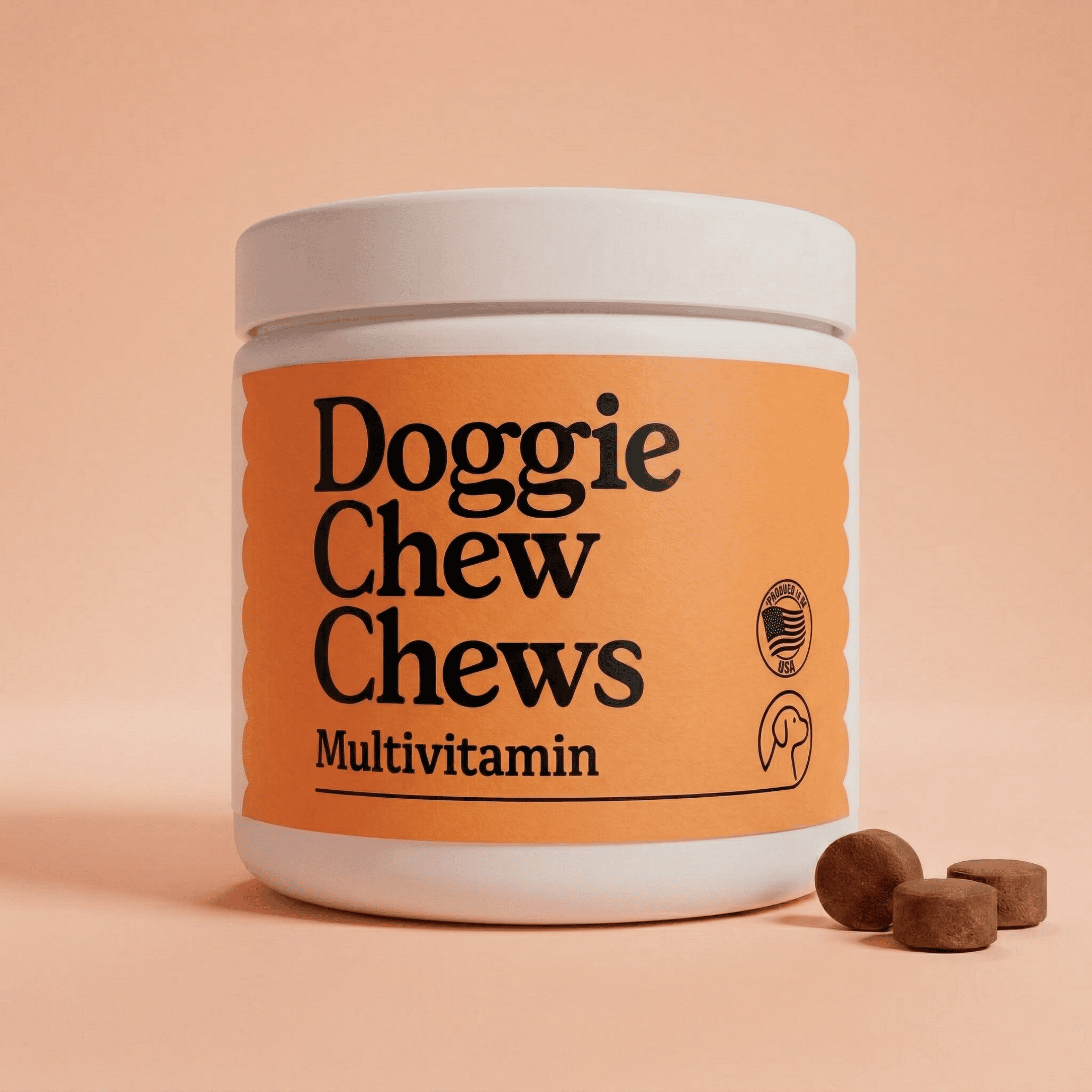
That's the thinking behind PetVita's Doggie Chew Chews (Skin & Coat) — a daily soft chew built around omega fatty acids, biotin, vitamin E, and antioxidant support, formulated for dogs experiencing dry skin or a dull coat, in a chew most dogs are genuinely happy to eat every day.
Browse the full Skin & Coat Supplements for Dogs collection.
Frequently Asked Questions
How long does it take to see a difference in coat quality?
Because skin and coat cells turn over on a multi-week cycle, most pet parents look for visible changes after several weeks of consistent daily use rather than days.
Can diet alone cause dry skin, even on good dog food?
Yes. Many commercial diets are formulated to meet baseline nutritional standards rather than to actively support skin and coat health, which can leave a gap even on an otherwise solid diet.
Should I see a vet before trying a skin and coat supplement?
If dryness, itching, or hair loss is sudden, severe, or accompanied by other symptoms, check with a vet first to rule out allergies or an underlying condition before starting any new supplement.
Related Reading
- Do Dogs Need a Daily Multivitamin? A Complete Guide for Pet Parents
- Dog Anxiety: Common Triggers, Calming Tips, and FAQ
This article is for general informational purposes and isn't a substitute for veterinary advice. Always consult your vet before starting a new supplement, especially if your dog has an existing health condition or takes medication.

Leave a comment
This site is protected by hCaptcha and the hCaptcha Privacy Policy and Terms of Service apply.