
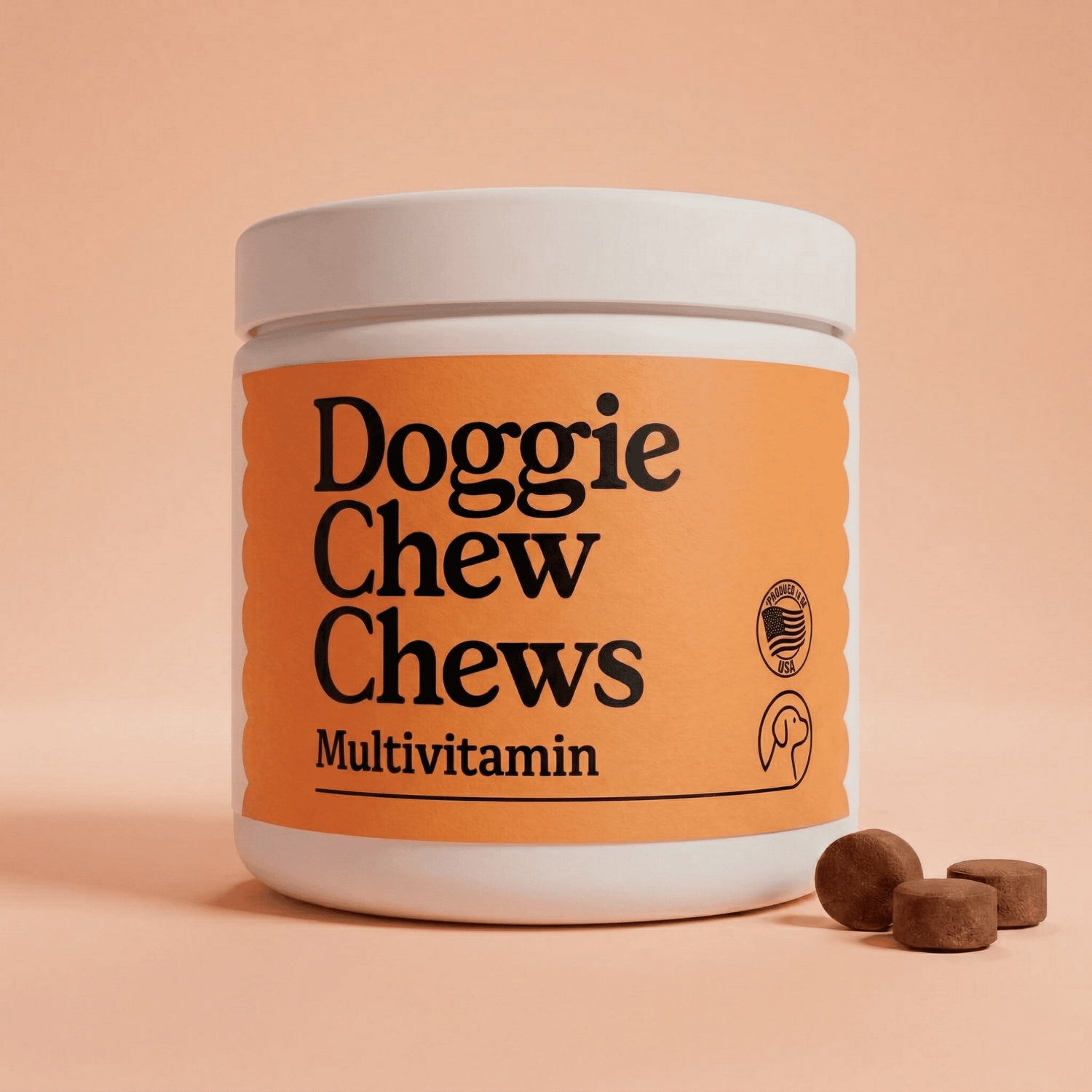
If you've ever stood in the pet aisle looking at a bottle of dog vitamins, wondering whether your dog actually needs one, you're not alone. It's one of the most common questions pet parents ask their vet — and the honest answer is: it depends on your dog's food, age, and health, but for many dogs, a daily multivitamin can genuinely help close nutritional gaps that diet alone doesn't fully cover.
Here's what to actually know before you decide.
What Is a Dog Multivitamin, and How Is It Different From a Human One?
A dog multivitamin is a supplement formulated specifically for canine nutritional needs — different ratios of vitamins and minerals, different safe dosages, and none of the additives (like xylitol) that are toxic to dogs but common in human supplements. Giving a dog a human multivitamin isn't just less effective; it can be genuinely unsafe. If you're going to supplement, it's worth using a product formulated and dosed for dogs specifically.
Do Healthy Dogs on Good Food Still Need One?
Most commercial dog foods are formulated to meet AAFCO's minimum nutritional standards — which is a baseline, not necessarily an optimum. Several everyday factors can widen the gap between what's on the label and what your dog actually absorbs:
- Processing and storage can reduce the potency of heat-sensitive vitamins over time.
- Age changes nutritional needs — puppies, adult dogs, and seniors don't absorb or require nutrients the same way.
- Activity level affects how quickly nutrients are used up; a highly active dog may need more support than a couch-loving one.
- Individual health conditions (digestive issues, skin sensitivities) can affect how well a dog absorbs nutrients from food alone.
None of this means your dog's food is bad — it means a multivitamin is designed to complement a complete diet, not replace it.
Signs Your Dog Might Benefit From a Multivitamin
A true vitamin deficiency usually needs a vet diagnosis, but some everyday signs make pet parents consider adding daily support:
- Lower energy than usual, without an obvious cause
- A coat that looks duller or drier than it used to
- Occasional digestive sensitivity
- Being an aging, picky, or highly active dog with higher nutritional demands
If you're seeing more serious symptoms — significant lethargy, appetite loss, or visible discomfort — those warrant a vet visit before (or alongside) any supplement, since they can also signal something a multivitamin won't address.
What's Usually in a Quality Dog Multivitamin
Formulas vary, but most reputable dog multivitamins are built around a few core nutrient categories:
- B-Complex Vitamins — commonly included to support normal energy metabolism.
- Vitamin E & Biotin — frequently used to support skin health and coat shine.
- Zinc & Antioxidants — often included to support normal immune function.
- Trace Minerals — support everyday cellular health and vitality.
How to Choose the Right Multivitamin for Your Dog
A few practical things to look for:
- Formulated for dogs, with a dosage guide based on your dog's weight — not a repurposed human supplement.
- No artificial colors or unnecessary fillers, especially if your dog has a sensitive stomach.
- A form your dog will actually eat. A powder or pill that gets refused every day isn't providing much support. A soft chew tends to have the best real-world compliance.
- Vet-informed formulation. Look for brands that are transparent about ingredient sourcing and dosing rationale.
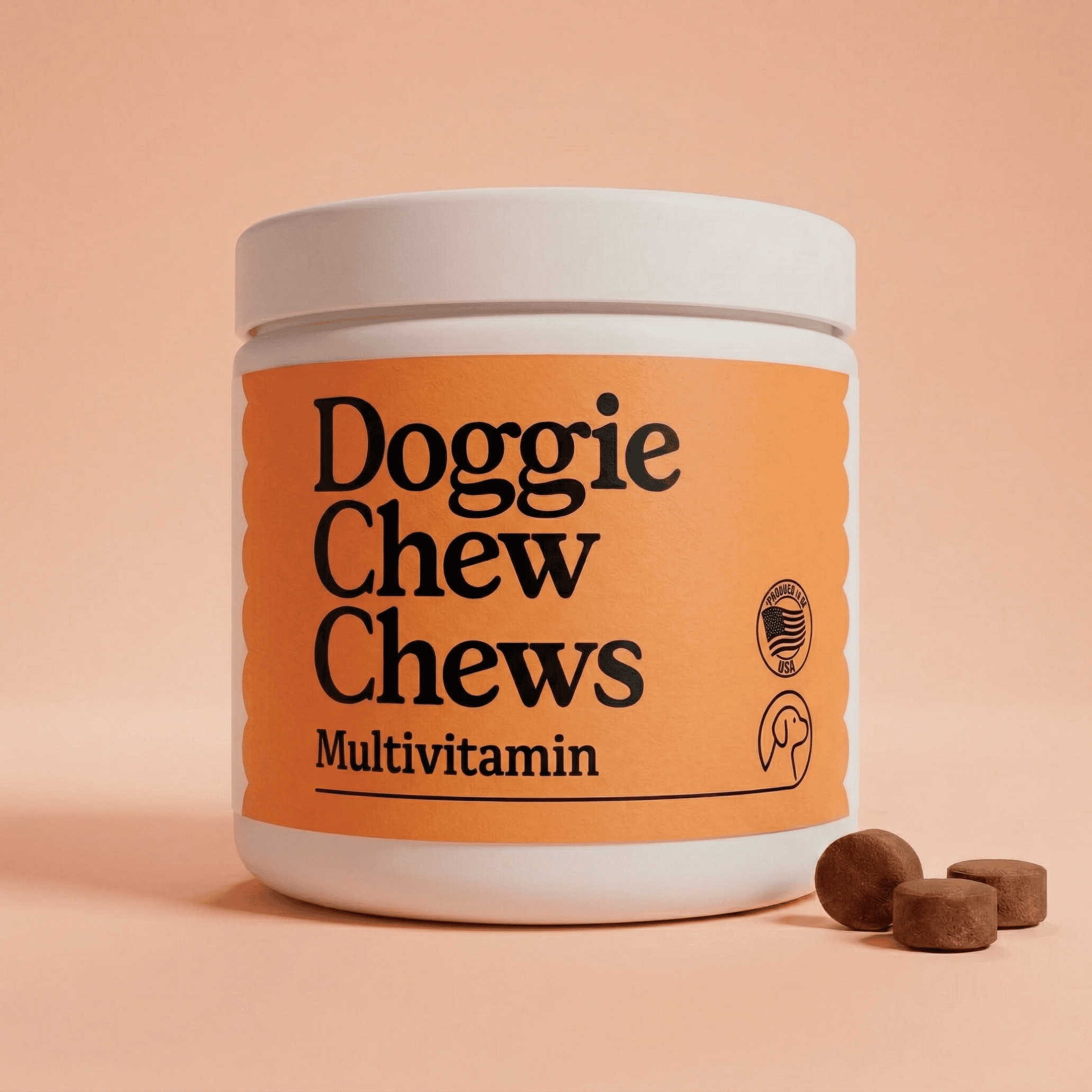
That's the thinking behind PetVita Multivitamin Chews — a daily soft chew built around the nutrient categories above, formulated specifically for dogs, with no artificial colors or fillers, in a chew most dogs are happy to take without a fight.
Frequently Asked Questions
Can I just give my dog a human multivitamin?
It's not recommended. Dosages and ingredient safety profiles differ between species, and some common human supplement ingredients (like xylitol in gummy vitamins) are toxic to dogs.
How long does it take to see a difference?
It varies by dog, but many pet parents report noticing changes in energy or coat condition within a few weeks of consistent daily use.
Should I check with my vet first?
Yes, especially if your dog has an existing health condition, is on medication, or is pregnant or nursing. A multivitamin is meant to complement your vet's guidance, not replace it.
Related Reading
- Dog Multivitamin FAQ: Dosage, Safety, and Ingredients Explained
- Dog Joint Pain: Early Signs and How to Support Hip & Joint Health at Every Age
- Dog Skin & Coat Health: What Actually Causes Dry Skin and a Dull Coat
This article is for general informational purposes and isn't a substitute for veterinary advice. Always consult your vet before starting a new supplement, especially if your dog has an existing health condition or takes medication.

Leave a comment
This site is protected by hCaptcha and the hCaptcha Privacy Policy and Terms of Service apply.